Introduction
Most corporate videos get watched once and forgotten by Tuesday. A handful get shared, quoted, and referenced years later — and the difference rarely comes down to budget.
According to HubSpot's 2025 research, 87% of marketers say video has had a direct, positive impact on sales. But volume alone doesn't create impact. With video creation up 88% year-over-year, the real challenge isn't making a corporate video. It's making one that actually works.
So what separates the forgettable from the effective? This article breaks down 14 hand-picked corporate video examples across brand films, explainers, testimonials, animated videos, and documentary formats. For each one, we cover what it is, why it works, and one specific technique you can borrow for your next project.
Key Takeaways
- Corporate video covers brand films, testimonials, explainers, culture pieces, recruitment videos, and more
- The best examples share three things: a clear goal, a genuine human element, and a visual style that serves the message
- Format and length should always serve the video's purpose, not the other way around
- Brands like Apple, Dove, and Slack succeed by focusing on audience outcomes rather than product features
- These 14 examples give you a concrete reference point for your next corporate video project
What Is a Corporate Video?
A corporate video is any non-advertising video produced by a brand or organization to achieve a specific business goal — from awareness and recruitment to training and investor relations.
The format varies widely. Common types include:
- Brand films — emotional, values-driven stories about who the company is
- Explainer videos — clear, concise breakdowns of how a product or service works
- Testimonial videos — real customers or employees sharing genuine experiences
- Culture/recruitment videos — showcasing workplace environment to attract talent
- Product demo videos — showing the product in action to drive purchase decisions
- Animated videos — using motion graphics or animation to simplify complex ideas
- CSR/documentary videos — purpose-driven storytelling around values and impact
- Event highlight reels — capturing conferences, launches, and brand activations
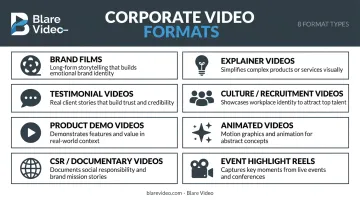
These formats often overlap — a testimonial can double as a brand film, and a product demo can also function as a culture piece. The examples below span all of these types, each selected to illustrate a specific production technique you can apply to your own work.
14 Great Corporate Video Examples
These 14 examples were selected across industries, budgets, and formats. Each entry breaks down what the video does, why it works, and what type of company can apply the same approach. What connects all of them: clear messaging, strong creative execution, and a strategic intent that goes well beyond "let's make a video."
Apple — Shot on iPhone
Apple lets real users and professional filmmakers demonstrate iPhone camera capability through cinematic short films and user-submitted content. No spec sheet. No product announcements. Just stunning footage with a four-word watermark.
By making the customer the hero of the demo, Apple turns a technical feature into an aspiration — and builds an ongoing content ecosystem powered by its own user base. The campaign won the Cannes Lions Creative Effectiveness Grand Prix in 2025, marking its 10th anniversary.
| Attribute | Detail |
|---|---|
| Video Type | Brand/Product Film |
| Key Technique | User-generated content + cinematic framing |
| Best For | Consumer product brands wanting to showcase capability through real-world outcomes |
Google — Year in Search
Every December, Google releases a short film built entirely from its own search data — a rapid-fire montage of the year's defining moments, cut to music, designed to move people.
It transforms raw behavioral data into emotional storytelling, making Google feel less like a tech platform and more like a witness to human experience. The 2025 edition was a 2026 Webby Award nominee in Social Video – Short Form.
| Attribute | Detail |
|---|---|
| Video Type | Brand/Cultural Film |
| Key Technique | Data-driven narrative + montage editing |
| Best For | Brands with large datasets or audience insights they can humanize |
Slack — So Yeah, We Tried Slack
A deadpan, mockumentary-style explainer where the production team at Sandwich documented their own experience adopting Slack — complete with fourth-wall breaks, dry humor, and actual workplace chaos. It racked up 5 million YouTube views and became one of the most-referenced B2B launch videos ever made.
Humor lowers the barrier to understanding a technical product. The comedic tone makes enterprise software feel approachable and shareable — two qualities that almost never coexist in B2B video.
| Attribute | Detail |
|---|---|
| Video Type | Explainer / Culture Video |
| Key Technique | Comedy + documentary style (fourth-wall breaks) |
| Best For | B2B and SaaS companies whose products solve workplace problems |
Dove — Real Beauty Sketches
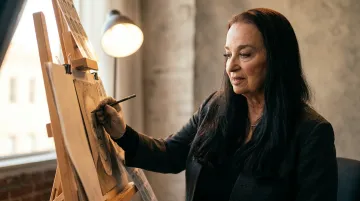
A forensic artist draws two portraits of each subject: one based on her own self-description, one based on a stranger's description. The gap between the two is the entire story.
Launched in 2013 across 46 YouTube channels in 25 languages, the campaign generated more than 163 million views and 4.6 billion media impressions — becoming the most-viewed online video ad at the time and winning the Titanium Grand Prix at Cannes. Dove never mentions soap. It sells self-worth instead.
| Attribute | Detail |
|---|---|
| Video Type | Brand Values / Emotional Storytelling |
| Key Technique | Social experiment + intimate documentary framing |
| Best For | Consumer brands wanting to build purpose-driven brand identity |
Airbnb — Made Possible by Hosts
Shot in vintage 4:3 aspect ratio with retro color grading and real photographs from actual guest trips, this testimonial film feels like flipping through someone's photo album. The resemblance is deliberate.
The visual style carries the message directly. Warmth and community are signaled through aesthetic choices alone, repositioning Airbnb from a lodging app into a human experience platform. The production decisions are the argument.
| Attribute | Detail |
|---|---|
| Video Type | Testimonial / Brand Film |
| Key Technique | Nostalgic visual language + vintage film aesthetic |
| Best For | Service brands wanting to reframe their offering as an experience, not a transaction |
Microsoft — Empowering Research Teams with AI
Real Microsoft researchers, real workspaces, handheld camera movement that feels unstaged. This recruitment and culture film avoids every polish instinct a corporate communications team typically has — and that's what makes it credible.
Showing actual employees doing actual work creates more trust than any scripted pitch. It works at the same time as thought leadership and talent attraction — without trying to be either explicitly.
| Attribute | Detail |
|---|---|
| Video Type | Culture / Recruitment Video |
| Key Technique | Authentic interview style + real work environments |
| Best For | Enterprise companies recruiting specialized talent or showcasing innovation culture |
Chipotle — Back to the Start
A stop-motion animated farmer watches his operation industrialize, then chooses to return to sustainable practices — all in under three minutes, with no dialogue. Just Willie Nelson covering Coldplay and a continuous side-scroll narrative.
Released in 2011, it won Cannes Lions' first-ever Branded Content Grand Prix. Animation made an uncomfortable subject (industrial farming) warm and widely accessible. The absence of words forced the visual storytelling to do everything.
| Attribute | Detail |
|---|---|
| Video Type | Animated Brand Film / CSR |
| Key Technique | Stop-motion animation + visual metaphor storytelling |
| Best For | Brands with a mission or values story that's difficult to communicate through live action |
Patagonia — Worn Wear: Stories We Wear
Released on Black Friday 2013 — deliberately — as an antidote to consumption culture, this documentary short follows real people whose Patagonia gear has outlasted years of hard use. Founder Yvon Chouinard appears. Nobody is a brand spokesperson.
The brand's sustainability commitment lands as credible because the people on screen actually live it. When your values show up in someone else's story, they're far more convincing than when you tell them yourself.
| Attribute | Detail |
|---|---|
| Video Type | CSR / Documentary Short |
| Key Technique | Character-driven documentary with values-in-action framing |
| Best For | Purpose-driven brands wanting to communicate CSR through authentic human stories |
Salesforce — Not Cool (What AI Was Meant to Be)
Matthew McConaughey and Woody Harrelson walk through various scenarios where AI goes wrong — then pivot to what Salesforce's Agentforce actually does right. The tone is comedic. The product message is specific.
Celebrity casting amplifies reach, but the smarter move here is the narrative reframe: instead of explaining AI features, the video dismantles AI anxiety first, then positions Agentforce as the practical alternative.
| Attribute | Detail |
|---|---|
| Video Type | Product / Brand Video (B2B) |
| Key Technique | Celebrity-led humor + narrative reframing of a complex product |
| Best For | Tech companies ready to use personality-driven storytelling to cut through category noise |
HubSpot — Retro Brand Film
A tongue-in-cheek, deliberately low-fi brand film that recounts HubSpot's founding with self-aware humor — leaning directly into the "boring B2B marketing" stereotype before dismantling it. The retro aesthetic is a creative choice, not a budget constraint.
Humor used as a feature rather than an accident makes a software company feel personable. Likeability is an underrated conversion driver in B2B.
| Attribute | Detail |
|---|---|
| Video Type | Brand Story / Culture Video |
| Key Technique | Retro aesthetic + self-aware comedic brand narrative |
| Best For | B2B brands that want to humanize their company story and build audience rapport |
Cisco — Making Security Human in a Hybrid World
A straightforward explainer for Cisco's Security Service Edge product that translates IT infrastructure into outcomes hybrid workers actually care about: smoother access, simpler management, fewer friction points in their day.
No jargon. No feature-first framing. Every technical capability is introduced through a human scenario first — because that translation work is what makes a complex product understandable to non-technical buyers.
| Attribute | Detail |
|---|---|
| Video Type | B2B Explainer Video |
| Key Technique | Outcome-focused framing + plain-language storytelling |
| Best For | B2B companies selling technical products to mixed technical/non-technical audiences |
Wistia — One, Ten, One Hundred
Three creative teams. One brief. Budgets of $1K, $10K, and $100K. Wistia documented the entire process — constraints, compromises, creative breakthroughs — across a four-part documentary series.
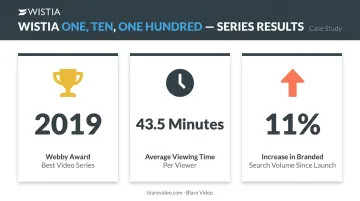
The result: a 2019 Webby Award for Best Video Series, an average viewing time of 43.5 minutes per viewer, and an 11% increase in branded search volume since launch. Radical transparency about process builds more trust than polished outcome reels — viewers stayed for 43 minutes because the process itself was the product.
| Attribute | Detail |
|---|---|
| Video Type | Documentary / Thought Leadership |
| Key Technique | Behind-the-scenes transparency + comparative storytelling |
| Best For | Video-focused brands or agencies wanting to demonstrate expertise and build audience trust |
Square — The Corner Store
Square created a physical pop-up hub for small business vendors in a local neighborhood, then filmed it — letting the business owners tell the story in their own words, on their own terms.
The distinction matters: Square didn't produce a testimonial about their values. They built something real, then documented it. Credibility that's earned through action lands differently than credibility that's simply claimed.
| Attribute | Detail |
|---|---|
| Video Type | Community / Testimonial Video |
| Key Technique | Brand activation documented as authentic community story |
| Best For | Fintech and service brands wanting to build grassroots trust with small business audiences |
Duolingo — Math and Music Launch
Bright animation, Duo the owl, fast-cut product walkthroughs, and unmistakably Duolingo energy throughout. This product launch video introduces new subject categories without ever feeling like an announcement.
The brand mascot does most of the heavy lifting — Duo's personality is so well-established that the video reinforces identity and delivers product information simultaneously, without either suffering.
| Attribute | Detail |
|---|---|
| Video Type | Animated Product Launch Video |
| Key Technique | Brand mascot continuity + playful product walkthrough |
| Best For | Consumer apps and EdTech companies launching new features to existing audiences |
What the Best Corporate Videos Have in Common
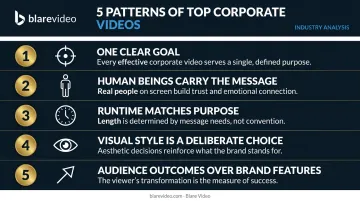
Across all 14 examples, five patterns emerge consistently.
One clear goal shapes everything
Every video on this list started with a single objective — awareness, recruitment, education, sales, culture. That goal shapes every creative decision that follows. Videos without a clear objective tend to say everything and land nothing.
Human beings carry the message
Whether employees, customers, animated characters, or founders, each video centers on a relatable human presence. The story vehicle changes; the human element doesn't. A Harvard Business article on storytelling found that facts are 20 times more likely to be remembered when wrapped in a story.
Runtime matches purpose
According to Wistia benchmarks, videos under one minute average 52% engagement; educational and explainer content in the 1–5 minute range typically retains over 50% of viewers. Rough benchmarks worth knowing:
- Brand awareness films: 60–90 seconds
- Testimonial/case study videos: 2–3 minutes
- Training modules: under 5 minutes each
Visual style is a deliberate choice
Airbnb's 4:3 ratio signals nostalgia and warmth. Chipotle's stop-motion makes sustainability feel approachable. Wistia's documentary format builds authority. In each case, the aesthetic reinforces the message. Style that serves the story is intentional — style that only decorates it is a distraction.
Audience outcomes, not brand features
Apple doesn't sell the camera — it sells what you can create with it. Dove leads with self-worth, not soap. Cisco frames its security infrastructure around a smoother workday, not technical specs. Every video on this list puts the audience's desired outcome ahead of the brand's features — and that's what makes them worth studying.
How to Choose the Right Corporate Video Production Partner
The right production partner brings strategic thinking before the camera turns on, not just technical skill during the shoot.
Questions to ask before hiring
- Do they have experience in your specific video type and industry?
- Can they handle the full process — scripting, storyboarding, filming, editing, and social cutdowns?
- Does their portfolio show range across formats, not just one style?
- Have they worked with brands at a comparable scale or complexity to yours?
What multi-market capability actually means
For brands running national or multi-location campaigns, a single-city agency creates real consistency problems. Matching lighting setups, interview styles, and post-production treatment across markets requires a production infrastructure, not just freelancer networks.
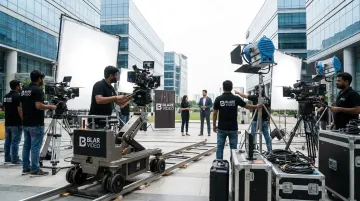
Blare Video operates across 20+ major US markets — Los Angeles, New York, Chicago, Atlanta, Dallas, Miami, and more — through a national production network built for this. Coordinated multi-city campaigns for clients in tech, healthcare, retail, and financial services run under the same brief, the same visual standards, and the same post-production workflow regardless of where filming takes place. Work with brands like Google, TikTok, and Taco Bell demonstrates that scale in production is only consistent when the infrastructure actually supports it.
Portfolio vs. demo reel
A demo reel shows technical capability. A real client portfolio shows strategic thinking. Look for evidence that the production company understood a business problem, made a format recommendation based on that problem, and executed against a clear goal, not just captured beautiful footage.
Frequently Asked Questions
What should be in a corporate video?
Every corporate video needs a clear objective, a human story or real voice, production quality appropriate to the brand, and a call to action matched to the format. A testimonial needs a strong end pull; an explainer needs a product next step; a brand film needs an emotional landing point.
What is a video that promotes a product?
A product demo video highlights a product's features, use cases, and benefits to drive purchase intent. Unlike a brand film — which focuses on values rather than capabilities — strong product videos still use emotional framing to make the case land.
How long should a company profile video be?
Company profile videos typically run 90 seconds to 3 minutes. Under 2 minutes works best for web and social placements; longer formats suit sales presentations or investor decks where a more complete picture of the company's people and mission is expected.
What does "branded video" mean?
A branded video expresses a brand's identity, values, or personality rather than driving direct conversion. It prioritizes emotional connection and long-term brand perception — as opposed to a direct-response ad designed to generate immediate clicks or purchases.
What are the different types of corporate storytelling?
The main narrative structures used in corporate video are:
- Transformation story (before/after)
- Founder or origin story
- Customer success story
- Values-in-action story (like Patagonia's Worn Wear)
- Cultural documentary
Most strong corporate videos borrow from at least two of these.
What is the best format for a company profile?
The most effective format combines brief interview segments with real workplace footage, anchored by a voiceover or on-camera spokesperson. Keep it under 3 minutes, with enough b-roll to make the company feel tangible rather than abstract.