Introduction
Most buyers encounter a brand multiple times before they trust it enough to act. Written content moves information — video moves people. According to Wyzowl's 2026 State of Video report, 96% of B2B buyers prefer video content when learning about products and services, and 63% say they would most like to learn about a product or service by watching a short video.
A well-crafted brand story video communicates who a company is, what it stands for, and why it matters to the people it serves. This guide covers the elements, formats, and process behind brand story videos that elevate perception and drive results.
Key Takeaways
- Brand story videos build trust and mental availability before sales conversations begin
- Emotional narratives outperform feature-led messaging by 7x in B2B contexts
- Hook viewers in 3 seconds — median watch time on social is under 6 seconds
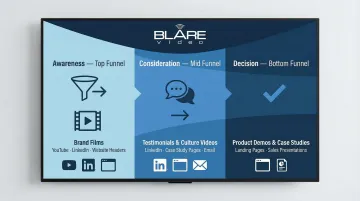
- Match video format to buyer stage: brand films for awareness, testimonials for consideration
- Choose a production team that leads with strategy, not just cameras
Why Brand Story Videos Are a Marketing Asset
The Psychology Behind Storytelling
Human memory is wired for narrative, and video amplifies this effect by combining visuals, emotion, and sound simultaneously. Research shows that deeply processed stories linger in the mind and persist as lasting memories, whereas non-narrativized information is quickly forgotten.
This preference is quantifiable: when asked how they would most like to learn about a product or service, 63% of consumers choose short video, comfortably beating text-based articles (12%), infographics (7%), and webinars (4%).
Business Impact: Trust Before the First Call
Brand story videos build trust before a sales conversation ever begins. They shape perception, reduce buyer hesitation, and establish authority in competitive markets. In B2B contexts, emotional campaigns deliver 7x larger business effects than rational campaigns, and 2x the brand effects.
In industries like technology, healthcare, and financial services, putting a human face on your brand before a prospect ever picks up the phone sets you apart from competitors who lead with specs alone.
The Shareability Advantage
Video content is more likely to be shared organically than any other format. On LinkedIn alone, video posts are shared 20x more than any other content type. This extends brand reach without additional ad spend, multiplying visibility through authentic audience engagement.
Multi-Platform Utility and ROI
A single well-produced brand video can be repurposed into:
- Paid ads across social platforms
- Website headers and landing pages
- Social media clips (vertical and horizontal)
- Investor presentations
- Sales decks and email campaigns
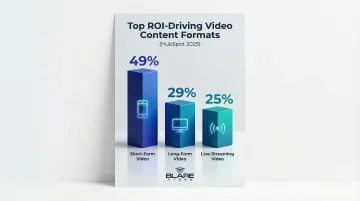
HubSpot's 2025 State of Marketing report identifies short-form video (49%), long-form video (29%), and live-streaming video (25%) as the top 3 ROI-driving content formats, multiplying the return on a single production investment.
The Essential Elements of a Brand Story Video
Audience Clarity: Define Your Viewer Before You Film
Effective brand story videos begin with a precise understanding of who the video is for—their demographics, pain points, values, and what motivates them. Without that clarity, even a well-produced video misses its mark.
Before production begins, define:
- Who is watching this video?
- What challenges do they face?
- What emotional outcome do you want them to experience?
- What action should they take afterward?
Authentic Brand Identity
The video must visually and narratively reflect the brand's core values, personality, and differentiators. Answer these questions through your story:
- What sets this company apart from competitors?
- What does the brand believe in?
- Why should the viewer care about this company?
Authenticity is more compelling than polish alone. LinkedIn's 2025 research shows that authentic emotion drives a 78% lift in engagement, while "real talk" videos featuring unscripted opinions drive a 103% higher dwell time.
Emotional Resonance: What Viewers Actually Remember
The most memorable brand videos evoke a specific feeling—whether inspiration, empathy, or pride. Show the human side of your company rather than a feature rundown. A healthcare client's relief, a founder's frustration before breakthrough, a team celebrating a milestone—these moments create lasting impressions that a product list never can.
To build emotional resonance, consider:
- Leading with a real person, not a logo or product shot
- Using specific detail (a name, a place, a number) rather than broad claims
- Letting silence and visuals carry weight alongside dialogue
Narrative Structure: Hook, Conflict, Resolution
Structure is what converts emotion into a story viewers follow. Every brand video needs a foundational arc:
- Hook: Capture attention immediately (within the first 3 seconds)
- Conflict: Create tension by presenting a problem the brand solves or overcame
- Resolution: Position the brand as the answer
This structure applies to corporate films, testimonials, and founder-story formats alike.
Concise and Purposeful Length
Every scene should earn its place. Cutting a 4-minute video to 90 seconds often makes it stronger, not weaker.
Platform-specific length guidelines:
- LinkedIn ads: 15-30 seconds for best completion rates (25-45%)
- Instagram/TikTok: 30-90 seconds
- YouTube educational content: 5-10 minutes
- Brand films: 2-5 minutes
Strong Call to Action
Every brand story video should close with a clear next step:
- Visit the website
- Request a consultation
- Follow on social media
- Download a resource
The CTA works best when it connects directly to the emotion the story built—if the video creates trust, the next step should be low-friction and confidence-forward, like scheduling a call rather than filling out a form.
Types of Brand Story Videos and When to Use Each
Different narrative formats serve distinct psychological needs across the buyer journey.
Main Brand Story Formats
Brand Films (2-5 minutes) are cinematic, values-driven narratives built for top-of-funnel awareness. A 2025 LinkedIn Creative Labs analysis of 13,000 B2B video ads found a +129% engagement lift from narrative-driven brand videos — making this format one of the highest-ROI investments in B2B content.
Founder/Origin Story Videos bring the "why" behind a business to the surface. They humanize leadership, establish credibility, and tend to resonate most with audiences early in the relationship — before a prospect is ready to evaluate solutions.
Customer Testimonial Videos do the heavy lifting mid-funnel. 48% of B2B buyers rely on case studies during the evaluation stage, and a well-produced testimonial carries more persuasive weight than any product description.
Culture/Mission Videos serve a different audience entirely — candidates, partners, and investors who need to understand what a company stands for before they commit. These are especially effective for employer branding and stakeholder alignment.
Match Format to Business Goal and Channel
| Buyer Journey Stage | Video Format | Best Channels |
|---|---|---|
| Awareness (Top Funnel) | Brand Films | YouTube, LinkedIn, website headers |
| Consideration (Mid Funnel) | Testimonials, Culture Videos | LinkedIn, case study pages, email |
| Decision (Bottom Funnel) | Product demos, case studies | Landing pages, sales presentations |
Social-First Considerations
Short-form brand story content (30-90 seconds) designed for Instagram, TikTok, or LinkedIn requires a different narrative approach than a long-form brand film. The hook must land in the first 2-3 seconds — and unlike a brand film, it can't rely on a slow build. Leading with a specific tension, a surprising claim, or a recognizable customer problem gives viewers a reason to stay before the skip option appears.
How to Create a Brand Story Video Step by Step
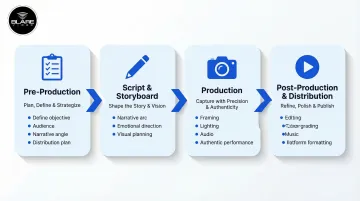
Pre-Production: Setting the Foundation
Define the video's objective:
- Awareness: Introduce the brand to new audiences
- Trust: Build credibility with mid-funnel buyers
- Conversion: Drive specific actions (demo requests, purchases)
Identify the target audience:
- Who are they?
- What do they care about?
- Where do they consume video content?
Determine the narrative angle:
- Founder story
- Customer journey
- Mission-driven message
- Problem-solution arc
Map out the distribution plan: Where will this video live? How will it reach the intended audience? Without a distribution plan built in from the start, even strong videos fail to reach their audience.
Teams that skip this phase typically discover the gap at launch — when it's too late to course-correct.
Script and Storyboard Development
A strong script controls the emotional arc, guides visual direction, and sets pacing — all before a camera rolls.
Show, don't tell: Demonstrate values through scenes and stories rather than stating them in voiceover. Instead of saying "We value innovation," show your team solving a problem creatively.
Production: Capturing the Story
Professional production quality affects brand perception—a poorly lit, poorly mixed video signals low investment to viewers.
What professional quality means in practice:
- Stable, intentional camera framing
- Lighting that matches tone (warm for approachable, cool for technical)
- Clean audio — often more critical than visuals
- Direction that draws genuine performance from on-screen subjects
Getting authentic moments on camera requires directing experience, not just technical gear. A skilled production team guides subjects through interviews or scripted scenarios, helping them relax and communicate naturally. That's where equipment and expertise work together: Blare Video pairs professional cinema cameras (including the Red Epic 5K) with advanced stabilization systems and cinematic lens kits, giving directors the tools to capture genuine moments with precision.
Post-Production and Distribution
Post-production essentials:
- Editing: Maintain narrative pace—cut ruthlessly to keep viewers engaged
- Color grading: Reinforce brand tone (vibrant for energetic brands, muted for professional services)
- Music selection: Support emotional beats without overpowering the message
- Platform formatting: Horizontal for YouTube/web, vertical for stories and reels
Once the edit is locked, distribution determines whether the video actually reaches the right people. Research where your target audience consumes video — the platform mix matters. For B2B brands, LinkedIn video content achieves an average engagement rate of 5.60%, well above static posts, and native LinkedIn uploads outperform YouTube links by 5x.
For search-driven discovery, 51% of B2B buyers research on YouTube before making purchase decisions, making it an essential channel for brands targeting mid-funnel audiences.
Common Mistakes That Undermine Your Brand Story
Making the Brand the Hero Instead of the Customer
Brand story videos that focus entirely on the company's achievements without centering the audience's needs or aspirations tend to feel like sales pitches rather than stories.
The most effective brand videos position the customer's world as the context and the brand as the enabler. Show how you solve their problems, not just how great you are.
Sacrificing Authenticity for Production Spectacle
A high-budget video with hollow or generic messaging will underperform a simpler, genuinely authentic piece.
Viewers pick up on inauthenticity fast. Testimonials that feel rehearsed, mission statements disconnected from real behavior, and forced on-camera enthusiasm all erode the credibility a brand story is meant to build.
Under-Branding Your Video
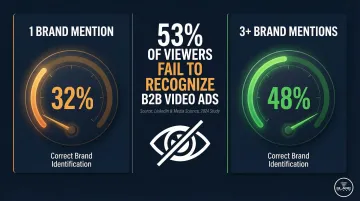
A 2024 LinkedIn and Media Science study found that 81% of B2B video ads fail to gain adequate attention or drive recall, largely due to weak branding.
Of 109 real B2B ads shown to users, 53% failed to recognize the ad, and only 36% correctly identified the brand. The solution? Brand early and often. Videos with three or more brand mentions achieve 48% correct brand identification, compared to just 32% for videos with only one mention.
Producing One Video Without a Distribution Plan
Strong brand recognition only matters if people actually see the video. A brand story sitting on a homepage with no promotion behind it reaches a fraction of its potential audience.
Your video strategy should include:
- Paid promotion (LinkedIn Ads, YouTube pre-roll)
- Organic social distribution (native uploads, not just links)
- Email integration (embedded in newsletters and nurture campaigns)
What to Look for in a Video Production Partner
Strategy Before Production
The clearest sign of a true production partner: they ask about your audience and business goals before a single camera is mentioned. If a company skips concept development and scripting and jumps straight to execution, you're working with a vendor, not a collaborator. Strategy before production is what separates brands that look polished from brands that actually connect.
Proven Portfolio Across Relevant Industries
A production company with experience in corporate storytelling, testimonial production, and multi-platform delivery brings contextual knowledge that accelerates results. That kind of experience shows in the work. Blare Video's portfolio — spanning clients like Google, TikTok, Taco Bell, and Williams-Sonoma — reflects depth across corporate, retail, and technology sectors, with full-service production from concept through post-production. Operating across Los Angeles, San Diego, Las Vegas, Phoenix, and Tucson also means national campaigns don't require juggling multiple vendors.
Practical Considerations
Ask about:
- Production timeline: How long from brief to delivery?
- Revision process: How many feedback rounds are included?
- Deliverable formats: Can they output for multiple platforms and aspect ratios?
- Scalability: Can they grow with your content needs across channels?
A production partner who answers these without hesitation — and structures their process around your goals, not just their workflow — will save you significant time and rework down the line.
Frequently Asked Questions
What are brand story videos?
Brand story videos are video productions designed to communicate a company's identity, values, mission, and differentiators through narrative rather than direct promotion. They build emotional connection with the audience by showing what the brand stands for and why it matters.
What are the essential elements of brand storytelling?
Five elements anchor every effective brand story video: a clear sense of audience, an authentic brand identity, emotional resonance, a narrative arc with a hook and resolution, and a call to action that guides viewers toward a next step.
How long should a brand story video be?
Length depends on format and platform. Social-first clips typically run 30-90 seconds, mid-length brand films range from 2-5 minutes, and educational YouTube content performs best at 5-10 minutes. Every second should serve the story rather than pad the runtime.
How much does a brand story video cost?
Costs vary widely based on shoot days, crew size, location, and post-production scope — projects can range from a few thousand dollars to six figures. Request a quote from a production company that can walk you through what's included at each budget tier.
What does a brand storyteller do?
A brand storyteller shapes the narrative strategy before any filming begins — choosing the right angle, audience focus, emotional tone, and which messages to prioritize so the final video serves both business goals and viewer expectations.