Introduction
Most B2B software buyers have already made up their minds before they talk to anyone in sales. According to Gartner's 2025 survey, 61% of B2B buyers now prefer a rep-free buying experience — and the G2 2024 Buyer Behavior Report, which surveyed 1,940 software decision-makers, found that 83% prefer to self-serve during the discovery phase alone.
That shift has made product video one of the most critical assets in a SaaS company's marketing stack. A weak walkthrough doesn't just underperform — buyers simply move on to a competitor whose product is clearer on screen.
Here's what this guide covers:
- The standout B2B SaaS product video examples worth studying in 2026
- Which video types work at each funnel stage
- What separates videos that convert from those that just get skipped
Key Takeaways
- 81% of B2B software buyers prefer self-service during research — video is how they evaluate products before ever booking a demo
- The best examples (Slack, Monday.com, Salesforce, Zendesk, LeanData) lead with buyer pain, not product features
- Different video types serve different funnel stages: explainers for awareness, demos for consideration, testimonials for late-stage conversion
- Pacing, structure, and production quality determine whether a video builds trust or loses the viewer in the first 10 seconds
- The strongest B2B SaaS videos share one trait: they make the buyer feel understood before they ever show the software
What Are B2B SaaS Product Videos (and Why Do They Matter in 2026)?
A B2B SaaS product video is a short-form video asset built to communicate the value of software to a business buyer. Unlike B2C video, these aren't about entertainment or impulse — they answer questions like: Does this fit our workflow? Can I justify this to my CFO? Will my team actually use it?
The buyer behavior data makes the stakes clear:
- 77% of B2B buyers consider product demos valuable in late-stage buying (Demand Gen Report, 2024)
- 62% actively seek out audio and video content throughout the research process
- 94% of B2B technology buyers say demos tailored to their use case are important (TrustRadius)
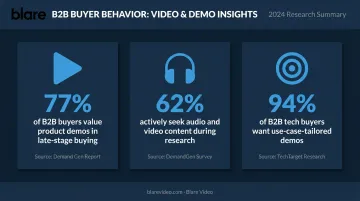
SaaS companies that don't show their product early in the funnel lose prospects to competitors who do — not because the competitor has a better product, but because the buyer could see it working.
The examples below span different formats, funnel positions, and production budgets — chosen specifically because each solves a distinct buyer problem in a distinct way.
Best B2B SaaS Product Video Examples in 2026
These videos were chosen based on narrative clarity, funnel alignment, production quality, and observable impact — not just brand recognition.
Slack — "What is Slack?" (Demo/Explainer Hybrid)
Slack's video opens with a direct challenge: "Tired of constant context-switching?" That single line does the work most SaaS videos skip — it names the pain before showing any product. From there, the video moves through channels, file sharing, and notifications in working context, not a sanitized product environment.
The tone stays human throughout. There's no corporate narration or feature-list cadence. It mirrors how a good salesperson actually pitches: establish the problem, then show the relief.
The problem-first structure keeps viewers watching. UI demonstrations feel authentic rather than staged, and the pacing gives buyers enough context to imagine their own team using it.
| Attribute | Detail |
|---|---|
| Video Type | Demo/Explainer Hybrid |
| Funnel Stage | Top-of-funnel awareness through mid-funnel consideration |
| Key Technique | Problem-first narrative with authentic UI demonstration |
Monday.com — Paid Video Ad Campaign
Monday.com's paid video ads open by asking the viewer about how they'd ideally like to work — then position the platform as the flexible, build-it-yourself answer. Rather than listing features, the ads use micro-scenarios: automated task notifications firing, timelines shifting, teams staying aligned without a meeting.
The approach is different from most B2B software ads, which lead with product capability. Monday leads with aspiration, then backs it up with specifics.
The aspirational hook casts a wide net, and each scenario grounds a product feature in a tangible business outcome — move faster, stay aligned, spend smarter. A complex platform, made approachable.
| Attribute | Detail |
|---|---|
| Video Type | Paid video ad / product overview |
| Funnel Stage | Top-of-funnel brand awareness and lead generation |
| Key Technique | Aspirational opening hook with outcome-tied feature demonstrations |
Salesforce — AI CRM Video (Hybrid Narrative)
Salesforce's approach to product video breaks from enterprise conventions. Their 2023 narrative film "Salesforce 2030: A Glimpse of an AI Future" — directed by Sarah Kunin with UX concepts by Liz Trudeau and agency Tiny Wins — follows a character named Jordan, a Trailblazer navigating business challenges with AI assistance. Product functionality appears woven into a story rather than presented as a feature tour.
It's a longer format that earns its runtime by making the viewer care about the outcome before showing the product.
The character-driven structure sustains attention across a longer runtime. Product UI appears in context rather than as a demo, and the brand's distinctive tone — quirky but credible — separates it from generic enterprise software content.
| Attribute | Detail |
|---|---|
| Video Type | Hybrid product demo and brand storytelling |
| Funnel Stage | Mid-funnel consideration; ideal for product launch campaigns |
| Key Technique | Character-driven narrative with embedded UI demonstration |
Zendesk — Product Walkthrough
Zendesk's overview demo — with over 610,000 YouTube views — takes a deliberately clean approach: voiceover narration over actual interface recordings, structured around relatable support scenarios rather than a feature checklist. The framing is consistently buyer-first: "Let's say your customers mostly send emails..."
There's no dramatic music or over-produced motion graphics. Just a clear, honest walk through what the product does.
Scenario-based narration makes abstract features feel immediately relevant to a specific buyer's situation. The no-frills honesty signals product confidence, and the clean visual execution builds credibility without feeling overproduced.
| Attribute | Detail |
|---|---|
| Video Type | Product walkthrough / feature demo |
| Funnel Stage | Mid-to-late funnel; product pages and sales follow-up |
| Key Technique | Scenario-driven narration over clean UI recordings |
LeanData — Corporate Brand and Event Videos (Produced by Blare Video)
Blare Video produced two corporate video projects for LeanData, a B2B data technology company known for lead routing and revenue conversion on the Salesforce platform.
Each project tackled a different format and audience need:
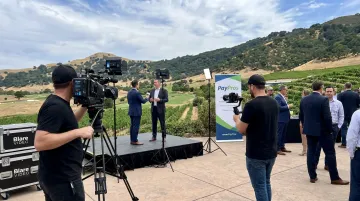
- Customer Day Event video — Filmed at a hotel and conference center in downtown San Francisco, the production documented speeches and event atmosphere while capturing structured client testimonials in a dedicated interview space, giving LeanData both coverage and conversion-ready proof points in a single asset.
- Ops Stars event video — A two-minute edit covering a sales and marketing summit focused on data strategy and lead-to-revenue conversion. Atmospheric music, tight editorial pacing, and concise interviews conveyed both event energy and LeanData's subject matter expertise.
Both projects were produced end-to-end by Blare: on-site filming, structured post-production (immediate footage backup, proxy editing workflows, color correction), and multi-format delivery for repurposing.
Professional production turned what could have been basic event documentation into sales-ready content serving two audiences at once — existing clients being educated and prospects being persuaded. The hybrid of event coverage and structured testimonials gave LeanData a versatile asset library from a single engagement.
| Attribute | Detail |
|---|---|
| Video Type | Corporate brand / event / customer testimonial |
| Funnel Stage | Mid-funnel trust building; website and sales enablement |
| Key Technique | Hybrid event coverage with dedicated testimonial capture |
Types of B2B SaaS Product Videos and When to Use Them
Not every video serves the same buyer, and deploying the wrong format at the wrong funnel stage is one of the most common (and expensive) mistakes SaaS marketers make.
Explainer / Positioning Videos — Top of Funnel
These videos sell the concept, not the product. They lead with buyer pain, establish emotional resonance, and end with a low-friction CTA like "See how it works."
- Best placement: Homepage hero, YouTube, paid ad campaigns
- Ideal for: Problem-naive audiences who don't yet understand why they need the product
- Runtime target: Under 90 seconds — Vidyard's analysis of nearly 1 million B2B videos found that 65% of viewers stay engaged through videos under one minute
Product Demo Videos — Mid Funnel
These show real software in real workflows for buyers who've already said "tell me more." The goal isn't to explain the concept — it's to build enough confidence for the next step.
- Best placement: Product pages, sales outreach emails, "Book a Demo" pages
- Ideal for: Evaluation-stage buyers comparing 2–3 shortlisted vendors
- Runtime target: 1–3 minutes; enough to show meaningful functionality without losing the viewer
Customer Testimonial / Case Study Videos — Late Funnel
B2B purchases involve multiple stakeholders. Testimonial videos let real customers do the selling — combining interview segments with product context. 55% of B2B buyers find case studies and product reviews helpful in the decision process, per the Demand Gen Report.
- Best placement: Landing pages, proposals, post-demo follow-up sequences
- Ideal for: Buyers who need peer validation to justify the purchase internally
Onboarding and How-To Videos — Post-Purchase
These reduce time-to-value and improve retention by turning new signups into confident users. Production polish matters less here than clarity and pacing.
- Best placement: In-app onboarding, help centers, customer success email sequences
- Ideal for: New users who need step-by-step guidance to reach their first win
- Runtime target: Can run longer (5–15 minutes) since the viewer is actively seeking detailed guidance
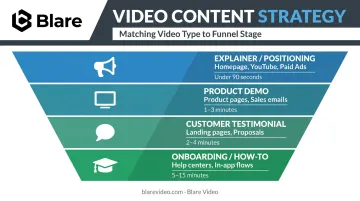
Here's a quick reference for mapping each format to your funnel:
| Video Type | Funnel Stage | Best Placement | Runtime |
|---|---|---|---|
| Explainer / Positioning | Top of funnel | Homepage, YouTube, paid ads | Under 90 seconds |
| Product Demo | Mid funnel | Product pages, sales emails | 1–3 minutes |
| Customer Testimonial | Late funnel | Landing pages, proposals | 2–4 minutes |
| Onboarding / How-To | Post-purchase | Help centers, in-app flows | 5–15 minutes |
How We Selected These Examples
Each video in this list was assessed on four criteria:
- Narrative clarity — Does it lead with buyer pain before product features?
- Funnel alignment — Is it deployed where the buyer's head is at?
- Production quality — Does the visual and audio execution reinforce credibility?
- Observable signal of effectiveness — Views, campaign longevity, cultural resonance, or stated outcomes
The videos that didn't make the cut shared predictable failure modes: feature-dumping without context, generic stock footage, runtimes that overstay their welcome, and a clear mismatch between the video's tone and the buyer's actual sophistication level.
The examples that did make the cut tell a different story. Whether it's Slack's conversational walkthrough, Zendesk's scenario-based demo, or LeanData's event-plus-testimonial hybrid, each was built around a specific buyer's situation — not shaped by an internal product roadmap.
Conclusion
The best B2B SaaS product videos in 2026 aren't walkthroughs or user manuals. They're buyer-centric narratives that meet prospects where they are in the funnel and give them a clear reason to take the next step.
None of those three elements works in isolation. A compelling concept executed poorly will underperform. A polished video built around the wrong message won't convert. Before commissioning your next video, audit what you have against the criteria above: narrative clarity, funnel alignment, production execution, and observable effectiveness.
If that audit reveals gaps, working with a production partner who understands B2B buying contexts makes a measurable difference. Blare Video produces corporate and technology videos from concept through final delivery, with production teams operating across Los Angeles, New York, Chicago, and more than 20 other US markets. Reach out to discuss your next SaaS video project.
Frequently Asked Questions
What is a B2B SaaS product video?
A B2B SaaS product video is a short-form video asset designed to communicate the value of a software product to business buyers. It typically addresses how the product solves a specific workflow problem, who it's built for, and what outcome a buyer can expect — with an eye toward ROI and stakeholder justification rather than general appeal.
What's the difference between a SaaS explainer video and a product demo video?
An explainer video sells the concept — it follows a problem → solution arc for top-of-funnel buyers who don't yet know they need the product. A demo video shows the actual interface and features in action, built for mid-to-late stage buyers who are already comparing options.
How long should a B2B SaaS product video be?
Top-of-funnel explainer and ad videos perform best under 90 seconds. Mid-funnel product demos can run 1–3 minutes for buyers actively in evaluation mode. Onboarding and how-to videos can run considerably longer — 5 to 15 minutes — since the viewer is seeking detailed guidance.
How much does a B2B SaaS product video cost to produce?
Cost varies widely by format, complexity, and production level. The right budget depends on funnel placement and expected asset lifespan — a homepage hero video used for two years warrants a different investment than a short-cycle sales follow-up clip.
Where should B2B SaaS companies place their product videos?
- Homepage hero: Short explainer cut for top-of-funnel visitors
- Product pages: Demo walkthrough for buyers in evaluation mode
- Customer story pages: Testimonial and case study videos
- Outbound email sequences: Short clips or screen recordings in sales follow-up
- YouTube: Full-length demos and explainers for organic SEO reach
What makes a B2B SaaS product video actually convert?
The highest-converting SaaS videos share a few consistent traits:
- Lead with a specific buyer pain point, not a feature list
- Show the product in a realistic use-case context
- Match runtime to funnel stage (shorter at top, longer mid-funnel)
- Close with a clear, low-friction call to action