
Introduction
Music video budgets span a wide range—from a few thousand dollars for a single-location indie shoot to hundreds of thousands for major-label productions. Since Billboard began counting video streams toward the Billboard 200 chart in 2020, music videos have become more strategically important for artists and brands alike.
With streaming now accounting for 69% of total recorded music revenues, visual content has shifted from a promotional add-on into a direct revenue driver.
This guide breaks down typical cost ranges by budget tier, the key factors that drive prices up or down, where money is actually spent across production phases, and how to determine what your specific project should cost. Whether you're an emerging artist planning your first professional video or a label evaluating a six-figure production, the numbers ahead will help you set a realistic budget—and know exactly what you're paying for.
Key Takeaways
- Entry-level music videos typically cost $2,000–$5,000; professional independent productions run $10,000–$30,000; commercial/studio-level shoots start at $50,000+
- The biggest cost drivers are crew size, shoot days, location fees, equipment level, and post-production complexity
- Low-budget shoots rely on a skeleton crew and a single location; higher-budget productions add full crews, premium gear, and complex post-production
- Major label and brand-funded videos involve significantly more logistical overhead than independent productions
- Spending more increases production reliability and visual polish—but the right budget matches your creative vision, distribution goals, and audience expectations
How Much Does a Music Video Cost?
Music video production costs don't follow a fixed formula. Pricing depends on creative concept, production scale, crew requirements, and market rates.
Misreading the budget often creates problems in both directions: underbudgeting forces on-set compromises, while over-specifying production for platforms that don't require broadcast quality wastes money. Choosing the cheapest option without evaluating deliverables can leave you with a final product that doesn't match your vision.
Lower budget tiers rely on combined crew roles, natural lighting, and minimal post work. Upper tiers include fully separated departments, cinema-grade equipment, and complete post-production pipelines. Knowing what each tier includes — and what it doesn't — is how you avoid paying for capabilities you don't need.
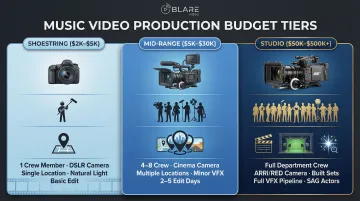
Shoestring Budget ($2,000–$5,000)
What's Typically Included:
- One shoot day with one or two crew members (director often doubling as DP and editor)
- DSLR or mirrorless camera
- Single location, typically private property to avoid permit fees
- Natural or minimal artificial lighting
- Few or no paid actors
- Basic editing with quick color correction
- Permits often avoided through careful location selection
Best For:
Emerging or independent artists testing concepts, self-funded projects focused on creative storytelling over technical polish, and social-first content for platforms like TikTok or Instagram where lo-fi aesthetics are acceptable.
Modest to Mid-Range Budget ($5,000–$30,000)
What's Typically Included:
- Multiple shoot days with a small-to-medium crew of four to eight people
- Higher-end cameras (e.g., BMPCC, RED Komodo)
- Multiple locations with some location fees and city permits
- Costuming options and paid actors
- Minor visual effects possible
- Two to five days of editing and color correction
Best For:
This tier works well for:
- Independent artists targeting YouTube and streaming platforms
- Bands with label support who need professional output without a major-label budget
- Brands producing music content for marketing campaigns
It delivers the most value per dollar for most productions. A full-service production company like Blare Video — operating across Los Angeles, San Diego, Las Vegas, Phoenix, and Tucson — can provide itemized quotes reflecting realistic market costs in your area.
Commercial/Studio Budget ($50,000–$500,000+)
What's Typically Included:
- Multi-day shoots with full professional film crews (DP, gaffer, grips, hair/makeup, PAs, DIT, colorist)
- Cinema-grade cameras (ARRI Alexa, RED Epic)
- Extensive pre-visualization including mood boards and storyboards
- Multiple locations or built sets
- Experienced SAG actors
- Full production insurance and city permits
- Advanced visual effects and a full post-production pipeline
Best For:
Major label releases, brand campaigns requiring broadcast-quality output, and artists for whom production value is central to their visual identity. Drake's "God's Plan" video cost $996,631.90; Coldplay's "feelslikeimfallinginlove" reached an estimated $3.5 million. At this level, the budget buys predictability and reduces creative risk — not just more equipment.
Key Factors That Drive Music Video Production Costs
Production costs follow your creative decisions. Adding a second location or a crowd scene ripples outward — raising crew costs, equipment needs, permit fees, and shoot days all at once.
Concept and Script Complexity
A narrative-heavy concept with multiple actors, wardrobe changes, and locations requires more pre-production planning, a larger director's department, and more shoot days than a performance-based video in a single controlled space.
The script is your first — and biggest — cost variable. Before locking your concept, ask: Does this story need three locations, or can one do the job? Do we need 15 background actors, or can five create the same impact?
Crew Size and Experience
Each department adds cost. While combining roles saves money, it increases risk of on-set improvisation. Typical day-rate ranges include:
- Director: $500–$1,250/day
- Director of Photography (DP): $1,000–$1,800/day
- Gaffer: $325–$400/day
- Production Designer: $450–$2,000/day (highly dependent on scope and past credits)
- Hair & Makeup Artist: $325–$500/day (plus kit fees)
- Production Assistant: $250–$300/day
Union productions governed by IATSE, DGA, and SAG-AFTRA require strict adherence to minimums, plus health and pension fringes that typically add 13.5% to 21% to the payroll. If you unknowingly hire union crew on a non-union shoot, the project can "flip," triggering unexpected scale wages.
Equipment Level
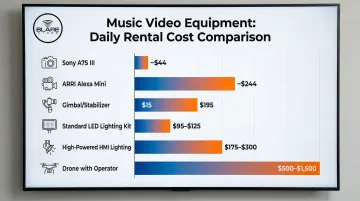
The cost difference between DSLR/mirrorless setups and cinema cameras is significant. A Sony A7S III rents for approximately $44/day, while an ARRI Alexa Mini body runs around $244/day. Additional specialty gear adds meaningful daily rental costs:
- Drones with licensed operator: $500–$1,500/day
- Gimbals/stabilizers: $15–$195/day
- Standard LED lighting kits: $95–$125/day
- High-powered HMI lighting: $175–$300/day
Camera package decisions should follow your DP's recommendation — the right operator matters more than the most expensive body on the rental house shelf.
Locations and Permits
Choosing outdoor public locations may require city permits ranging from $25 to over $1,000 per day depending on the city. Private studio or location rentals can range from $250 to $2,500+ per day. Shooting in major markets like Los Angeles raises both permit complexity and crew rate expectations.
FilmLA charges a $931 base application fee (covering up to five locations for seven days), while San Diego and Tucson offer no-fee permits. This location flexibility can save thousands on multi-location shoots.
Post-Production Scope
Everything that happens on set determines how much work happens in post. Editing days, color grading, visual effects, and delivery format requirements (YouTube, broadcast, social cuts) all extend post costs. A standard 3-minute video edit typically involves 2–3 days of post work minimum. VFX can add hundreds to thousands per effect depending on complexity.
Typical post-production rates:
- Video Editor: $25–$150/hour (entry-level $20–$45, senior $85–$150+)
- Colorist: ~$115/hour (US average)
- Visual Effects: $30/hour for simple cleanup to $2,000–$5,000 per minute of complex 3D animation
Music Video Cost Breakdown: Pre-Production, Production, and Post-Production
The total cost of a music video extends well beyond shoot day expenses. A useful way to think about budget allocation is across three phases. Neglecting any one phase typically results in cost overruns or quality problems in the others.
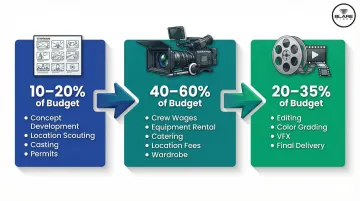
Pre-Production (Typically 10–20% of Total Budget)
This phase is often undervalued — but it directly determines how efficiently shoot day runs. Skipping it is the leading cause of costly overruns and missed shots. Pre-production typically covers:
- Concept development and storyboarding
- Mood board creation and visual references
- Location scouting and permitting
- Casting and scheduling
- Production insurance setup
Production (Typically 40–60% of Total Budget)
The single highest-concentration cost phase. Expenses include:
- Crew wages
- Equipment rentals
- Location fees
- Catering (~$30/person/day minimum; professional shoots budget $35–$60/person/meal)
- Wardrobe and props
- Actor fees
- Mobile support (toilets for outdoor shoots, parking, security)
Overtime is a common unplanned expense and should be factored as a contingency. For a 20-person indie shoot, expect to spend around $475/day on craft services and catering alone.
Post-Production (Typically 20–35% of Total Budget)
Once the shoot wraps, post-production takes the raw footage across the finish line. Deliverables typically include:
- Editing (1–3 days for a simple performance cut; 3–10 days for concept videos with VFX)
- Color grading
- Audio mixing and sync
- Visual effects
- Final delivery in multiple formats
Budget separately for archival and stock element licensing fees — these line items are easy to miss and can add $500 or more to your final costs.
How to Estimate the Right Music Video Budget for Your Project
Budget planning should start with the creative brief, not a number. Define the intended platform (YouTube, TikTok, broadcast), expected audience size, and the role this video plays in a broader release strategy before setting a spending limit. A video meant to drive a major album release warrants more investment than a B-side social clip.
Walk through the key decision variables:
- Number of shoot days
- Number of locations
- Whether professional actors are required
- What level of post-production complexity the concept needs
- Whether the market (e.g., LA vs. smaller markets) affects crew and permit costs
Build a line-item budget from these decisions rather than starting with a lump sum. Working with an experienced production company lets you get itemized quotes that reflect realistic local market costs, camera package options, and crew day rates — before you commit to anything. Once you have those numbers, compare the total against your concept's scope. If the line items exceed your ceiling, that's a signal to simplify the concept, not cut corners on crew or equipment.
Common Music Video Budgeting Mistakes to Avoid
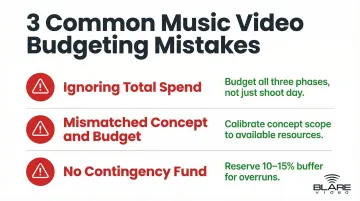
Focusing Only on Upfront Production Cost and Ignoring Total Spend
Many artists budget for the shoot day alone, then get caught off guard when the remaining invoices arrive. Production day costs are typically only 40–60% of total spend. Costs that catch artists off guard include:
- Pre-production planning and creative development fees
- Location permits and scouting expenses
- On-set catering and transportation
- Hard drive and data management costs
- Post-production editing and color grading invoices
Always account for all three phases when setting your budget ceiling.
Underspecifying or Over-Specifying the Concept for the Budget
Trying to execute a $50,000 concept on a $5,000 budget leads to compromises that undermine the final product. Conversely, hiring a full crew for a simple single-camera performance video wastes money on resources that won't improve the output. The concept and the budget must be calibrated together.
Skipping the Contingency Fund
Set aside 10–15% of the total budget as a contingency buffer before you lock your final number. This covers overtime, weather-related delays, equipment substitutions, and additional edit rounds. Without it, a single unexpected half-day of overtime can send the entire production into deficit.
Conclusion
Music video production costs vary widely—from a few thousand dollars for a lean indie shoot to hundreds of thousands for commercial-level productions. The most important factor is aligning the budget to the creative concept, distribution platform, and career or brand goals.
Artists and brands who map out the full cost picture — pre-production, production, and post-production — are the ones who avoid budget blowouts and end up with a video that actually matches their vision. Those who don't often face costly surprises at the editing stage, when changes are hardest to make.
Before you commit to a number, lock in these three things:
- A clear creative brief that defines the concept, locations, and cast
- A line-item budget covering every phase, not just the shoot day
- A contingency buffer of 10–15% for unexpected costs
Frequently Asked Questions
How much does it cost to produce a music video?
Music video production costs range from $2,000–$5,000 for simple single-location shoots, to $10,000–$30,000 for professional independent productions, to $50,000–$500,000+ for studio-level videos. Crew size, shoot days, locations, and post-production scope are the primary cost drivers.
How much does a 5-minute music video cost?
Runtime alone does not determine cost — concept complexity, scene count, and locations drive the budget. That said, an elaborate 5-minute narrative typically requires more shoot days and post-production work than a 3-minute performance clip, often adding 20–40% to the total.
What is the biggest single cost in music video production?
Production day expenses — crew wages, equipment rentals, and location fees — typically represent 40–60% of the total budget. For narrative-heavy videos, VFX work in post-production can rival or exceed that figure.
Can you make a professional-looking music video on a tight budget?
Yes. A focused concept (single location, performance-based, available light) with an experienced small crew can yield strong results at lower price points. The key is matching the concept's ambition to the available resources rather than trying to execute a large-scale vision on a shoestring.
How long does it take to produce a music video from start to finish?
Most music videos take 2–6 weeks from concept to delivery. Pre-production runs 1–3 weeks, the shoot itself spans 1–3 days for most independent projects, and post-production editing and color add another 1–3 weeks.
How do I know if a music video production quote is fair?
Request an itemized breakdown across pre-production, production, and post-production, then compare line items against typical market rates for crew day rates, equipment rentals, and editing hours. Any production company worth hiring will explain every cost clearly — including contingency buffers and insurance.