Introduction
Most brands invest heavily in marketing but remain frustratingly forgettable. Audiences scroll past their content, watch once, and move on without recalling who created it or what the company stands for. The problem isn't effort—it's medium. Static images and text require audiences to piece together brand identity across dozens of disconnected exposures, making recognition slow and inconsistent.
Video changes this equation. It combines visuals, sound, motion, and narrative into one unified experience—letting brands communicate their full identity in minutes instead of months.
This guide covers the core brand elements every video must express, the video types that build recognition fastest, how to build a consistent strategy from concept through post-production, and how to measure whether your videos are actually strengthening brand identity or just adding to the noise.
Key Takeaways
- Video builds brand identity by unifying consistent visuals, real stories about your people and purpose, in one shareable format
- Core elements—logo, color palette, tone, messaging—must stay consistent across every video to build audience recognition
- Brand storytelling, testimonials, and culture videos each serve a different function — and together they cover the full marketing funnel
- Without a consistent strategy from planning through publishing, video dilutes your brand rather than strengthening it
- Track engagement rate, viewer retention, and brand recall to measure whether video content strengthens identity
Why Video Is the Most Powerful Medium for Building Brand Identity
Video engages sight, sound, and emotion simultaneously, creating lasting impressions that text and static images cannot match. While the often-cited claim that viewers retain 65% of video content versus 10% from text lacks scientific evidence, the medium's effectiveness is measurable through adoption and buyer preference: 91% of businesses now use video as a marketing tool, and 96% of B2B buyers prefer video content when learning about products and services.
Video compresses brand recognition timelines dramatically. A two-minute brand video communicates personality, values, and tone in ways a blog post or brochure cannot replicate across multiple pages. Research on visual perception confirms that cognitive judgments form after just 100-millisecond exposure, meaning video's visual and auditory cues trigger instant brand associations.
Scale is where video pulls ahead of every other format. Video posts on LinkedIn are shared 20 times more than other content types, and a single well-produced video works across every channel at once. One asset reinforces brand identity across:
- Websites and landing pages
- LinkedIn, YouTube, and social media feeds
- Email campaigns and sales outreach
- Trade events and conference presentations
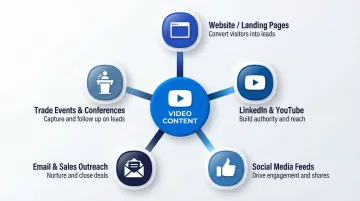
That cross-channel reach means more brand impressions without a proportional increase in production spend.
The Core Elements of Brand Identity That Every Brand Video Must Convey
Logo and Visual Identity
Logos should integrate intentionally throughout the video experience—not just stamped in a corner. Place logos in intros, outros, or as recurring visual anchors within the narrative. However, research from a 2025 peer-reviewed study analyzing 388 branded videos found that excessive logo placement actually decreases brand awareness. Consistent placement trains recognition — but restraint is what makes it stick.
Color Palette and Visual Consistency
Using the same color scheme across video backgrounds, motion graphics, and on-screen text creates a visual signature audiences associate with your brand—even before they see the logo. The same 2025 study confirmed that color tone (lightness and saturation) positively influences brand awareness, while foundational research demonstrates that color saturation and brightness directly impact emotional arousal and pleasure—critical for establishing emotional brand identity.
Tone of Voice and Language Style
Tone differentiates brands that sound corporate and stiff from those that feel confident and human. Deliver tone through narration, on-screen text, and interview-style dialogue. Every script must match how the brand communicates across all channels—blogs, emails, social posts. When video tone diverges from written content, audiences notice — and trust quietly breaks down.
Core Values and Brand Mission
Show values through actions, not declarations. A narrator stating "we care about our customers" lands flat. Real customer stories, employee perspectives, or documented outcomes — those build the credibility that scripted claims never can.
Ways to demonstrate brand values authentically:
- Feature real customers describing a specific problem your brand solved
- Show employees explaining why they do their work, not just what they do
- Document measurable outcomes (cost savings, timelines, before-and-after results)
- Use unscripted moments — natural reactions carry more weight than rehearsed lines
Messaging Consistency Across Platforms
When different videos feel disconnected, brand identity weakens — even if each video is individually well-produced. Whether it's a 30-second LinkedIn clip or a three-minute corporate overview, every video should feel like it belongs to the same brand family.
That means keeping these elements consistent across formats:
- Color and typography: Same palette, same font choices, same motion graphic style
- Tone: Formal or conversational — pick one and stick to it across all video types
- Visual treatment: Matching lighting style, aspect ratios, and editing rhythm
- Messaging hierarchy: Lead with the same core value proposition, regardless of length
Types of Brand Videos and What Each One Achieves
Not all brand videos do the same job. Each format targets a different stage of the buyer journey and a different emotional goal—knowing which to use (and when) is what separates a scattered video strategy from a coherent brand identity.
Here's a quick breakdown before diving in:
| Video Type | Funnel Stage | Primary Goal |
|---|---|---|
| Brand Storytelling | Awareness | Build emotional connection |
| Customer Testimonials | Decision | Drive purchase confidence |
| Company Culture | Awareness / Recruitment | Humanize the brand |
| Product Showcases | Consideration | Reduce buyer uncertainty |
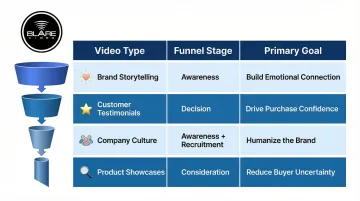
Brand storytelling videos put the company's purpose front and center: the why behind the brand, not just what it sells. These foundational videos work best as hero content on homepages or YouTube channels. Lead with human stories rather than product features—emotion drives connection, not specifications.
Customer testimonial videos let real customers do the selling. Authenticity is the deciding factor—overly scripted testimonials undermine credibility the moment viewers sense a rehearsed performance. According to Wyzowl, 77% of viewers report being convinced to purchase after watching a brand's testimonial video, making this format one of the highest-converting for bottom-funnel decisions.
Company culture videos show what working with—or for—the brand actually feels like. Real people, real environments, and real values in action: that's what separates a culture video from a recruitment brochure. Strong employer brands are reported to reduce cost-per-hire by up to 50% and turnover by 28%, according to LinkedIn Talent Solutions.
Product and service showcase videos close the gap between interest and purchase by showing exactly how something works in context. Brand visual identity should run throughout—color, typography, tone—not just appear as a logo at the end. Wyzowl reports that 80% of people have purchased or downloaded an app after watching a demo video, confirming that showing beats telling at the consideration stage.
Blare Video produces all four of these video types for corporate clients across industries, including technology, healthcare, and manufacturing. Productions are handled from concept through final delivery, with crews available in Los Angeles, San Diego, Las Vegas, Phoenix, and Tucson.
How to Build a Consistent Video Brand Strategy From Concept to Post-Production
Pre-Production: Define Goals and Audience Before Picking Up a Camera
The most common brand video mistake is starting with "what should we film?" instead of "what do we want audiences to feel, believe, or do after watching?" Define video objectives first:
- Objective clarity: Awareness, consideration, or conversion?
- Target viewer identification: Who needs to see this, and where are they in the buyer journey?
- Concept brief development: What core message anchors all production decisions?
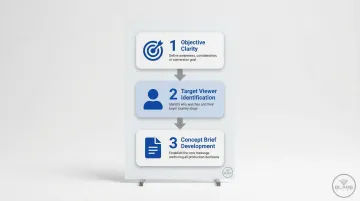
These answers guide everything from location choice to interview questions to music selection.
Production: Translating Brand Identity into Every Frame
Brand consistency starts on set, not in post. Every production choice—location, wardrobe, lighting style, camera movement, prop selection—communicates brand personality. A brand positioning itself as premium must back that up with professional production choices: clean locations, controlled lighting, intentional composition.
Scripting follows the same logic. Balance polish with authentic voice. Overly formal scripts make brands sound robotic; no script risks losing core messages. The goal is structured authenticity—knowing what must be communicated while leaving room for genuine human delivery.
Post-Production: Where Brand Identity Gets Locked In
Color grading is one of the most underestimated brand-building tools. The same footage can feel warm and approachable or cool and authoritative depending on color treatment—and that emotional signal should stay consistent across every video a brand publishes.
Music selection and sound design work the same way. Research confirms that increasing background sound tempo accelerates viewer arousal and behavioral response, which means sound is an active brand tool, not background filler.
Blare Video's full-service production process—from concept through post-production—ensures these brand decisions are deliberate across all deliverables, maintaining visual and sonic consistency across all deliverables.
Platform requirements vary significantly. A video produced for a website has different format, pacing, and length needs than one cut for LinkedIn or a trade event screen. Over 80% of LinkedIn video views occur on mobile devices, and 80% of users watch with sound off—making vertical formats and burned-in captions non-negotiable. Optimize each piece for its platform without sacrificing brand consistency.

How to Measure Whether Your Video Content Is Actually Building Brand Identity
Engagement Metrics as a Signal of Resonance
Likes, comments, shares, and click-through rates indicate whether content connects, but read these metrics in platform context. High engagement relative to reach suggests content communicates something audiences find worth responding to. Video posts on LinkedIn are shared 20 times more than other content types, making shareability a key identity-building metric.
Viewer Retention as a Measure of Message Delivery
Average watch time and drop-off points reveal where brand storytelling succeeds or loses audiences. Vidyard's analysis of nearly one million B2B videos shows that videos under one minute retain 65% of viewers to completion, while videos over 20 minutes see retention drop to just 20%.
Wistia's 2025 State of Video report reinforces this pattern: videos under one minute average 50% engagement, while 30-60 minute videos drop to 25%.
Drop-off timing also tells its own story:
- Early drop-offs (first 20 seconds) signal the opening isn't earning enough attention
- Mid-video drop-offs suggest the narrative is losing momentum before the key message lands
Brand Recall and Sentiment Tracking
The most meaningful measure of video effectiveness isn't view count — it's whether audiences remember who made the video and feel differently about that brand afterward. Google's Brand Lift methodology uses randomized control groups to measure the difference between those who saw the video and those who didn't, isolating true brand impact. Nielsen data shows that branded content can drive aided brand recall rates exceeding 80%.
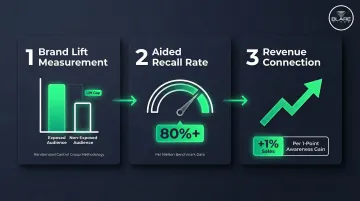
Track brand sentiment over time through surveys, focus groups, and social listening — then connect those numbers to revenue. Nielsen's 2021 Brand Resonance Report found that increasing awareness and consideration by just one point drives a 1% increase in future sales, which means upper-funnel brand metrics have a direct line to the bottom line.
Frequently Asked Questions
What types of videos are most effective for building brand identity?
Brand storytelling videos, customer testimonials, and culture content consistently outperform other formats for identity-building. The right mix depends on where the brand stands in its journey—new brands need foundational storytelling first, while established brands get more mileage from testimonials and behind-the-scenes culture pieces.
How long should a brand identity video be?
Most brand videos perform best at 1-3 minutes. Social cuts should be shorter—15-60 seconds for platform feeds—while detailed storytelling or testimonial content can run a bit longer as long as the narrative stays tight.
How do you maintain brand consistency across different video formats and platforms?
Build a brand video style guide covering logo usage, color palette, music tone, and approved voiceover styles—then apply it consistently across every format. That single reference document is what makes a 15-second Instagram clip feel like the same brand as a three-minute YouTube feature.
How often should a company publish branded video content?
Consistency matters more than frequency. A regular publishing cadence—even monthly—is more effective for brand building than sporadic bursts, because repetition is how brand identity becomes recognition. Forrester Research found that businesses producing at least 20 videos per quarter reported revenue growth 57% faster than non-video peers.
What makes a corporate brand video different from a regular marketing video?
Marketing videos drive a specific action—purchase, sign-up, download. Brand videos shape perception and build long-term recognition rather than chasing immediate conversions. The strongest brand videos do both: they build trust and familiarity that makes the eventual conversion feel like a natural next step.